
Some of the most common signs your pallet racking is damaged includes bent uprights, twisted beams, cracked welds, missing safety pins and visible corrosion. Each defect gives an early indication that your racking may no longer support its rated load or generally be fit for purpose.
In this article, we explain how to recognise these easily missed warehouse racking damages and what each one means for your day-to-day safety and stability.
Why Spotting Racking Damage Early is Important
Racking damage usually starts small but can become more serious over time if not addressed. Early identification of these damages prevents collapses, which can lead to injury and costly repairs.
Unchecked damage can lead to:
- Reduced load capacity
- Misalignment that spreads stress through the system
- Instability under forklift impact
- Higher repair and replacement costs
A routine visual check helps maintain safe and reliable storage. For more information on how to inspect pallet racking before buying, have a read of our in-depth article.
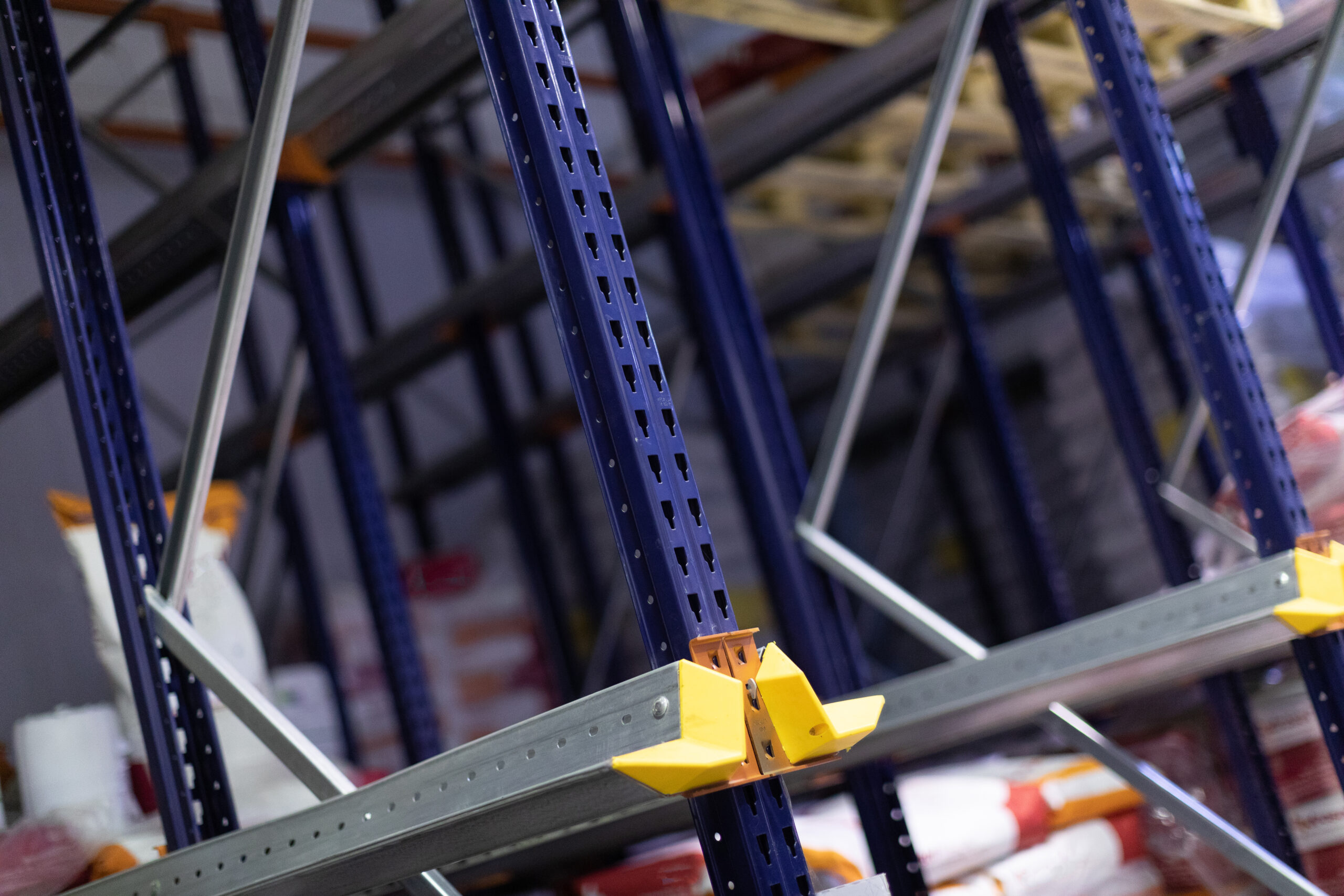
1. Bent or Twisted Uprights
Bent uprights ae one of the most common forms of racking damage. This is generally caused by impacts at low levels, usually from pallet trucks or forklifts.
How to spot it:
- Uprights that lean compared with neighbouring frames
- Steel that curves inward or outward when viewed from the side
- Deformation at the bottom 600 mm, where most impacts occur
Even small bends reduce the upright’s load capacity, but can be managed in the short term. Larger bends however, will likely fall outside safe limits and will require repair or replacement. A twisted upright can also misalign beams and increase stress across the frame.
2. Beam Deflection or Sagging
Your racking beams should always remain straight when unloaded. Visible sagging is a clear warning sign that your racking is structurally compromised.
How to spot it:
- A noticeable dip along the beam when viewed from the front
- Beams that sit lower on one side
- Paint wear around connectors, indicating movement
Permanent deflection is usually caused by overloading. A sagging beam no longer distributes weight evenly, which increases the risk of failure at full capacity.
3. Damaged or Worn Beam Connectors
Beam connectors lock into the racking uprights. So any damage here will directly affect structural integrity.
How to spot it:
- Cracks around connector plates
- Enlarged or distorted locking holes
- Loose or missing safety pins
Connector deformation can cause beams to lift or dislodge under load. Missing safety pins leave beams vulnerable to accidental dislodgment during forklift operations.
4. Missing or Loose Bracing
Bracing maintains the frame’s shape and prevents sideways movement.
How to spot it:
- Bracing sections that move when touched
- Missing horizontal or diagonal bars
- Bolt holes with no fixings
Loose or missing bracing reduces lateral stability and increases the risk of the frame leaning or collapsing. This type of damage must be fixed immediately under all health and safety guidelines.
5. Cracked or Split Welds
Racking welds hold the key structural points together. Therefore, any cracks indicate stress or previous loading around these essential structural elements.
How to spot it:
- Hairline cracks around joints
- Flaking paint, which often reveals hidden fractures
- Gaps where the weld has separated from the steel
A cracked weld weakens the frame by compromising the load capacity and unevenly dispersing it. Weld defects often require full component replacement rather than standard repair.
6. Corrosion and Paint Deterioration
Corrosion weakens steel and is common in older or damp environments.
How to spot it:
- Rust patches around base plates, connectors or welds
- Bubbling paint caused by moisture under the coating
- Flaking metal, especially near floor level or in cold stores
Surface rust should be monitored, but deep pitting reduces metal thickness and load capacity, and as such should be immediately addressed. Severe corrosion often means the component is no longer safe.
7. Misaligned Beams or Uneven Levels
Misaligned beams are a common sign of impact damage or worn connectors. Even slight movement can affect how weight is carried through the frame.
How to spot it:
- Beam levels that do not match across the run
- Connectors that do not sit flush
- Gaps between the beam end and the upright
Misalignment creates uneven load distribution, which increases stress on both the beam and the upright. It may also indicate hidden damage within the frame or connector.
Misaligned beams make pallet entry less predictable, increasing the chance of pallets catching, snagging or dislodging the beam during loading.
8. Damage to Safety Accessories
Pallet racking safety accessories absorb everyday knocks and protect the main structure from impact. When these components are damaged, the racking is more vulnerable to future hits.
How to spot it:
- Crushed column guards
- Bent rack end barriers
- Missing or damaged load notices
- Broken or sagging mesh or timber decking
If safety accessories are compromised, the uprights and beams face a higher risk of direct impact. Damaged decking can also reduce pallet stability.
Missing load notices create compliance and training issues, as operators cannot confirm the safe working load for each level.
9. Signs of Previous Repairs
Repairs indicate the racking has suffered earlier damage. Poor or undocumented repairs can mask structural weaknesses that reduce load capacity.
How to spot it:
- Ground-back steel with fresh paint
- Heat marks from straightening
- Welds that do not match the manufacturer’s pattern
Non-standard repairs may not meet the original design specification.
Components that have been heated, re-welded or mechanically straightened often lose strength and may not perform safely under load. Treated sections should be inspected by a competent person before the racking is used.
What to Do if You Find Racking Damage
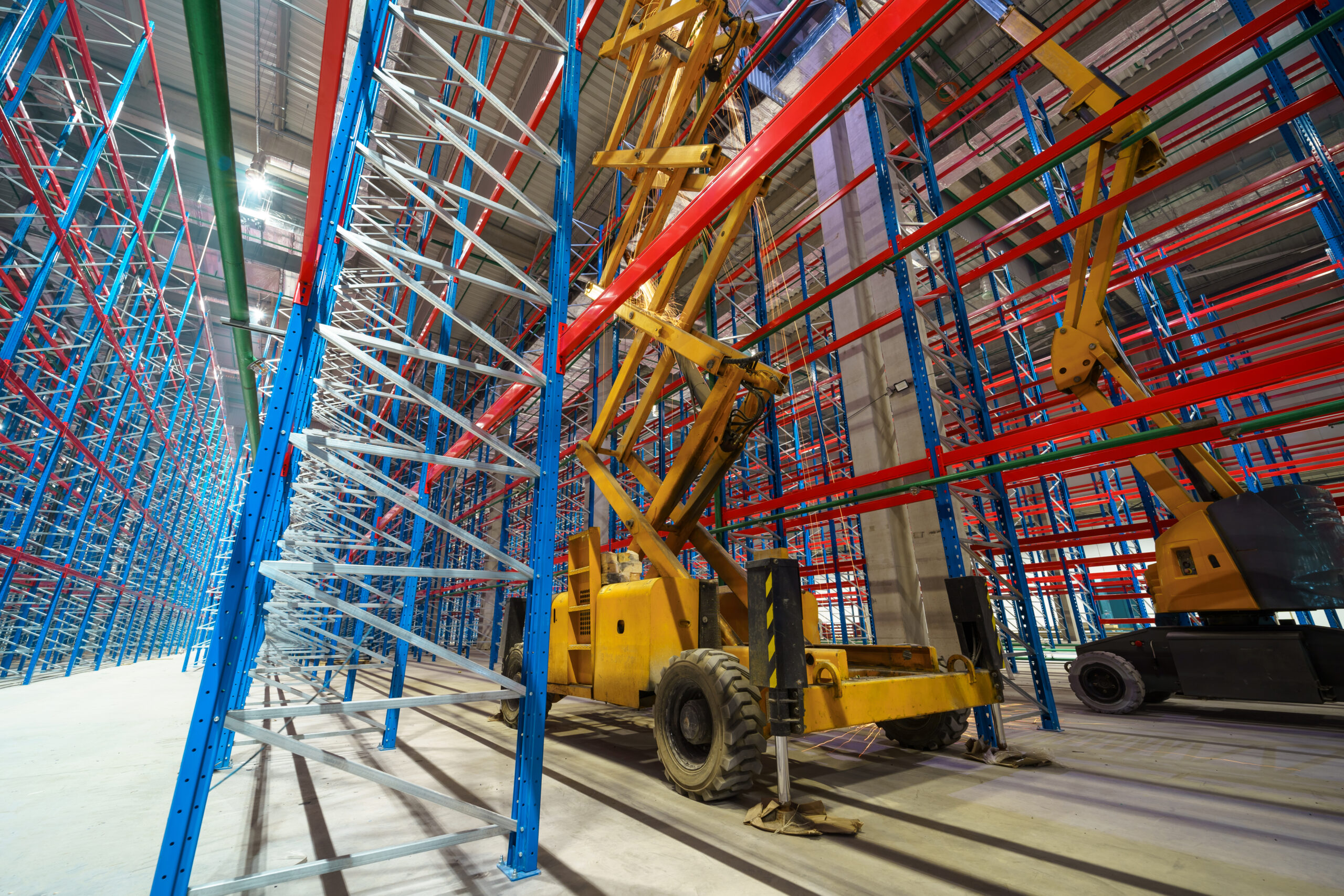
If you spot racking damage during routine checks, act immediately. Quick intervention reduces the chance of collapse, prevents further deterioration and keeps the system compliant with recognised standards. For more information, have a read of our ‘7 tips for pallet racking safety‘ article.
- Mark the damaged area so operators and forklift drivers are aware of the hazard and avoid loading the section.
- Unload the affected bay if the damage is moderate or severe. Removing the weight prevents further stress on weakened components.
- Photograph and record the defect to support repair decisions, track deterioration and provide evidence for suppliers or inspectors.
- Judge whether the defect falls into green (monitor), amber (repair required) or red (immediate unload) status.
- Arrange an assessment by a competent person, such as an experienced racking inspector, to confirm the correct repair or replacement work.
Prompt action keeps the damage contained and ensures the racking remains safe for continued use.
Conclusion
Common signs of racking damage include bent uprights, sagging beams, cracked welds, loose bracing and visible corrosion.
Each defect affects safety in different ways, but all should be recorded and investigated promptly. A clear inspection routine helps you spot these issues early and keep your warehouse racking safe, stable and compliant.