
Pallet racking is the structural framework that allows warehouses to store palletised foods vertically and safely. It is one of the most widely used storage systems in logistics and manufacturing because of how well it maximises floor space while keeping stock accessible.
In this article, we will provide a detailed overview of what pallet racking is, looking into their components, common types, operational principles and the practical considerations behind new versus used racking.
What is pallet racking and what is it used for?
Pallet racking is a heavy-duty storage system designed to hold goods stored on pallets. It used vertical steel frames and horizontal beams to create multiple storage levels above floor height. The primary purpose of the racking is to:
- Increase storage density by using vertical space
- Organise palletised goods systematically
- Enable forklift access for efficient handling
- Improve stock control and warehouse safety
Most pallet racking systems are adjustable, allowing beam levels to be repositioned to suit different pallet heights. This flexibility makes them suitable for industries ranging from retail distribution to food production and engineering.
In practical terms, pallet racking transforms empty airspace into usable storage capacity.
How pallet racking works in warehouses
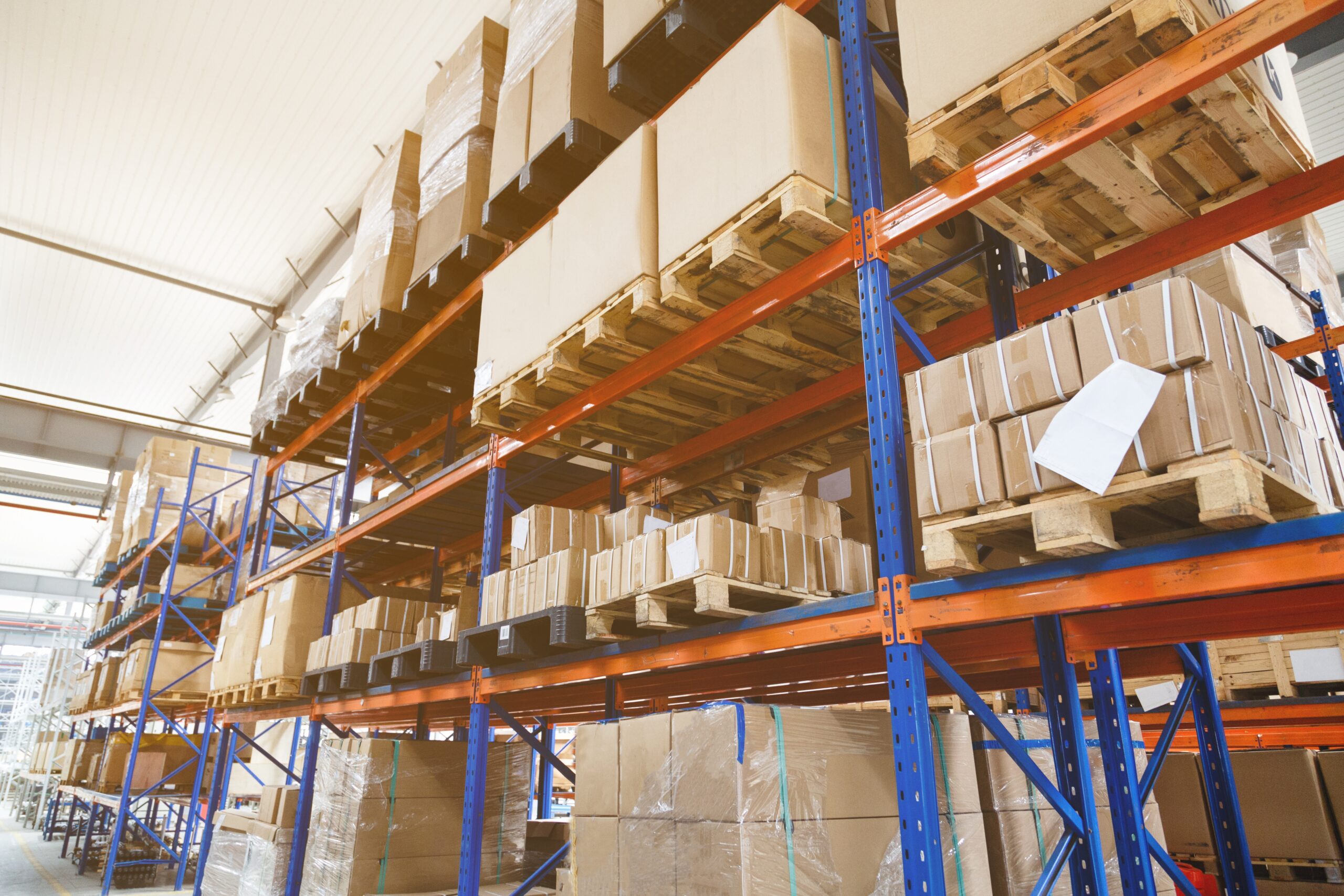
Pallet racking works by creating structural bays that support pallet loads at height. A standard racking bay consists of:
- Upright frames – Vertical steel columns that transfer load to the floor
- Beams – Horizontal support that hold pallets
- Bracing – Diagonal supports that provide rigidity
- Baseplates and floor fixings – Anchor the structure securely
Each beam level supports one or more pallets, depending on design. Loads are transferred through the beams into the upright and down to the floor slab. The entire system must be engineered to withstand static loads, dynamic loadings from forklifts and impact risk.
A correctly specified system ensures load capacity, stability and safe operation over time.
Key components of a pallet racking system
To understand what pallet racking is, it helps to break it down to its individual parts.
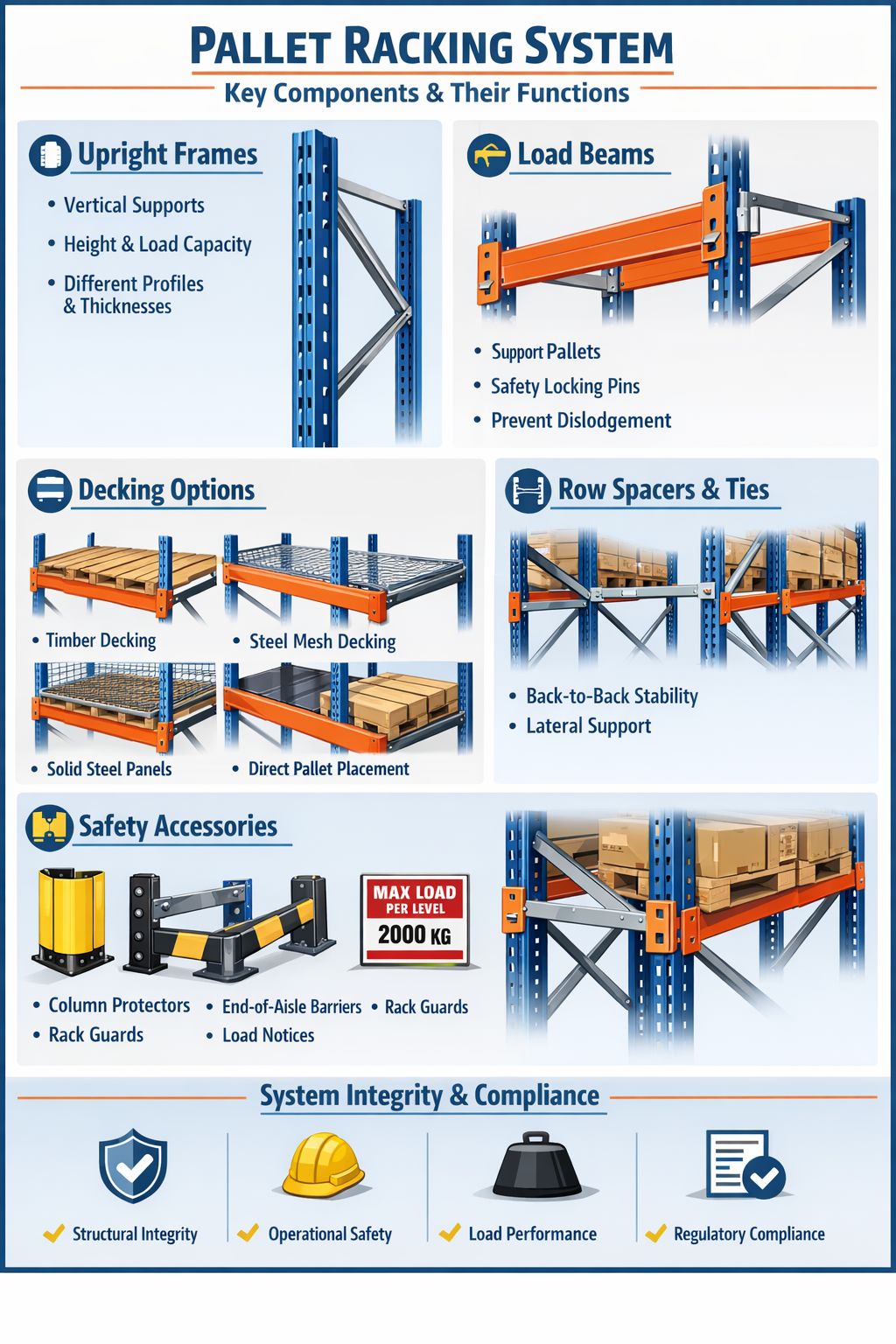
Upright frames
Upright frames are the vertical structures that determine both the overall height of the system and its load capacity. They transfer the weight of stored goods down to the floor slab.
They are manufactured in different steel profiles and thicknesses depending on the required strength. Heavier-duty applications, such as high-bay warehouses or dense storage layouts, require thicker steel and deeper frame sections. The specification of the upright largely defines how much weight a pallet racking system can safely carry.
Load beams
Load beams span horizontally between uprights and directly support pallets. They connect using engineered beam connectors and include safety locking pins to prevent accidental dislodgement during forklift operation.
Beam length and profile determine how many pallets can be stored per level and how much weight each level can support. Correct beam selection is critical, as overloading can cause deflection or structural damage over time.
Decking options
Depending on operational requirements, beams may support different decking types:
- Timber decking
- Steel mesh decking
- Solid steel panels
- Direct pallet placement
Decking helps distribute loads more evenly and can reduce the risk of pallets falling through or becoming unstable. Steel mesh decking is often used where fire safety or sprinkler compliance is a concern, as it allows water penetration.
The choice of decking depends on pallet condition, load type and safety considerations.
Row spacers and ties
Row spacers are used when racks are installed back-to-back. They connect adjacent frames, increasing lateral stability and helping the system act as a unified structure rather than isolated bays.
In long runs of racking, these components improve rigidity and reduce sway, particularly in taller installations.
Safety accessories
Safety accessories protect both the structure and warehouse personnel. These typically include:
- Column protectors
- End-of-aisle barriers
- Rack guards
- Load notices
Column protectors and barriers reduce damage caused by forklift impact, which is one of the most common causes of racking failure.
Load notices are legally required under Health and Safety Executive guidance. They must clearly state maximum permissible loads per bay and per beam level. These notices ensure operators understand system limits and help maintain compliance with workplace regulations.
Types of pallet racking and their operational logic
Different warehouse operations demand different storage strategies. While all pallet racking systems store palletised goods at height, the way they balance access, density and stock rotation varies considerably.
Adjustable pallet racking (APR)
Adjustable Pallet Racking, often abbreviated to APR, is the most widely installed pallet racking system in the UK. It provides direct access to every pallet position, making it highly versatile.
APR is best suited to environments with:
- High SKU counts
- Moderate stock turnover
- Varied pallet heights
Because beam levels can be repositioned, the system can adapt as product profiles change. This flexibility makes it ideal for general warehousing and distribution centres handling mixed goods.
The trade-off is density. APR prioritises accessibility over maximum storage capacity, as each aisle must allow forklift access to every bay.
Drive-in and drive-through racking
Drive-in and drive-through systems are designed to increase storage density by reducing the number of aisles required. Instead of accessing pallets from the front only, forklifts enter the racking structure and travel along internal support rails. To learn about the differences between drive-in and drive-through racking, have a read of our recent article.
They operate on two stock rotation principles:
- Last-in, first-out (LIFO) in drive-in racking
- First-in, first-out (FIFO) in drive-through racking
By minimising aisle space, these systems can significantly increase pallet positions within the same footprint. However, selectivity decreases, as pallets are stored in lanes rather than individual bays.
Structural demands are higher because forklifts operate within the frame. Uprights and rail supports must withstand greater impact risk, and careful driver training becomes essential.
These systems are often used for high-volume, low-SKU goods such as beverages or packaged products.
Push-back racking
Push-back racking increases density while maintaining loading from a single aisle. It uses inclined rails fitted with wheeled carts. Each time a new pallet is loaded, it pushes the previous pallet back along the lane.
Key advantages include:
- Higher storage density than APR
- Loading and unloading from one aisle
- Reduced forklift travel time
Because forklifts do not enter the structure, impact risk is lower than with drive-in systems. However, push-back racking includes moving components, which introduces additional complexity.
Maintenance of carts, rails and braking systems is essential to ensure smooth operation and consistent pallet flow. It suits operations where moderate SKU variety is combined with higher storage density requirements.
Pallet flow racking
Pallet flow racking, sometimes referred to as gravity flow racking, uses rollers set on a slight incline. Pallets are loaded at one end and move forward automatically under controlled gravity.
This system is commonly used in food production and other sectors where strict stock rotation is required.
Design considerations include:
- Roller braking systems to control speed
- Controlled descent to prevent load impact
- Consistent pallet quality to avoid jamming
Because pallets travel through the system independently, pallet condition and load uniformity are critical. Poor-quality pallets can disrupt flow and create safety risks.
Pallet flow systems combine structural engineering with mechanical handling principles, offering efficient FIFO rotation in high-throughput environments.
Comparing New vs Used pallet racking
The difference between new and used pallet racking is not performance, but provenance and traceability. When correctly specified and installed, both can perform to the same structural standard. The distinction lies in factors beyond performance such as documentation, inspection and procurement route.
| Feature | New Pallet Racking | Used Pallet Racking |
|---|---|---|
| Traceability | Full manufacturer traceability with documented product history and specification data. | Manufacturer origin may require verification; specification and compatibility should be confirmed before installation. |
| Load Information | Certified load tables supplied directly by the manufacturer, aligned with system configuration. | Load capacity must be verified based on beam type, upright profile and final installed layout. |
| Condition | Brand new components with uniform finish and no prior structural exposure. | Requires thorough inspection for impact damage, deformation, twisting or corrosion. |
| Warranty | Typically supplied with longer manufacturer-backed warranties. | Limited or supplier-based warranty depending on source and grading process. |
| Cost | Higher upfront capital investment. | Typically 30–50 percent lower cost compared to new systems. |
| Availability | May involve production and delivery lead times. | Often available immediately from stock, depending on quantities required. |
| Typical Applications | Commonly specified for new-build warehouses, brand-standardised operations and corporate roll-outs. | Widely adopted by start-ups, expanding warehouses and cost-sensitive projects. |
| Risk Considerations | Lower compatibility risk when supplied as a complete, manufacturer-matched system. | Beam and upright compatibility must be carefully checked, particularly when combining different brands. |
A common issue with used pallet racking arises when components from different manufacturers are combined without structural verification. Beam connectors vary between brands, and compatibility should never be assumed without confirmation.
Due diligence when purchasing used racking should include:
- Confirming beam and upright compatibility
- Verifying original manufacturer where possible
- Inspecting for twisting, impact damage or corrosion
- Ensuring load signage reflects the actual installed configuration
When sourced through reputable suppliers who inspect, grade and correctly document components, used pallet racking can perform identically to new systems.
The key distinction is the inspection and verification process, not inherent structural strength.
Safety and regulatory context in the UK
Pallet racking falls under the Provision and Use of Work Equipment Regulations (PUWER) and the Health and Safety at Work Act.
Warehouse operators must:
- Ensure equipment is suitable
- Maintain systems in safe condition
- Conduct regular inspections
- Display load notices
It is recommended that racking undergoes an annual expert inspection, supported by regular in-house visual checks.
Damage classification typically falls into:
- Green risk (monitor)
- Amber risk (repair soon)
- Red risk (immediate offload and repair)
Impact damage at the first beam level is particularly common due to forklift interaction.
Compliance is not optional. It is part of operational responsibility.
When is pallet racking the right storage system?
Pallet racking is most effective when:
- Goods are stored on standardised pallets
- Forklift handling is required
- Vertical clearance exceeds 4 metres
- Throughput justifies structured storage
It may not be suitable for:
- Very small items requiring bin storage
- Irregularly shaped goods
- Fully automated high-bay environments requiring bespoke systems
Selecting pallet racking should follow operational analysis, not habit.
Conclusion
Pallet racking forms the structural framework of a warehouse. It determines how goods are stored and accessed, and it has a direct impact on space use and operational control.
Whether specifying adjustable pallet racking, a high-density system or quality used pallet racking, the fundamentals remain consistent: correct design, verified load capacity and proper installation.
If you’re reviewing your current storage layout or are planning a new racking installation, our team at Pallet Racking Systems can help. We’ll provide you with practical guidance based on your space, stock profile, operational set-up and budget. Get in touch with us today to explore our used pallet racking options or for expert advice you can act on.